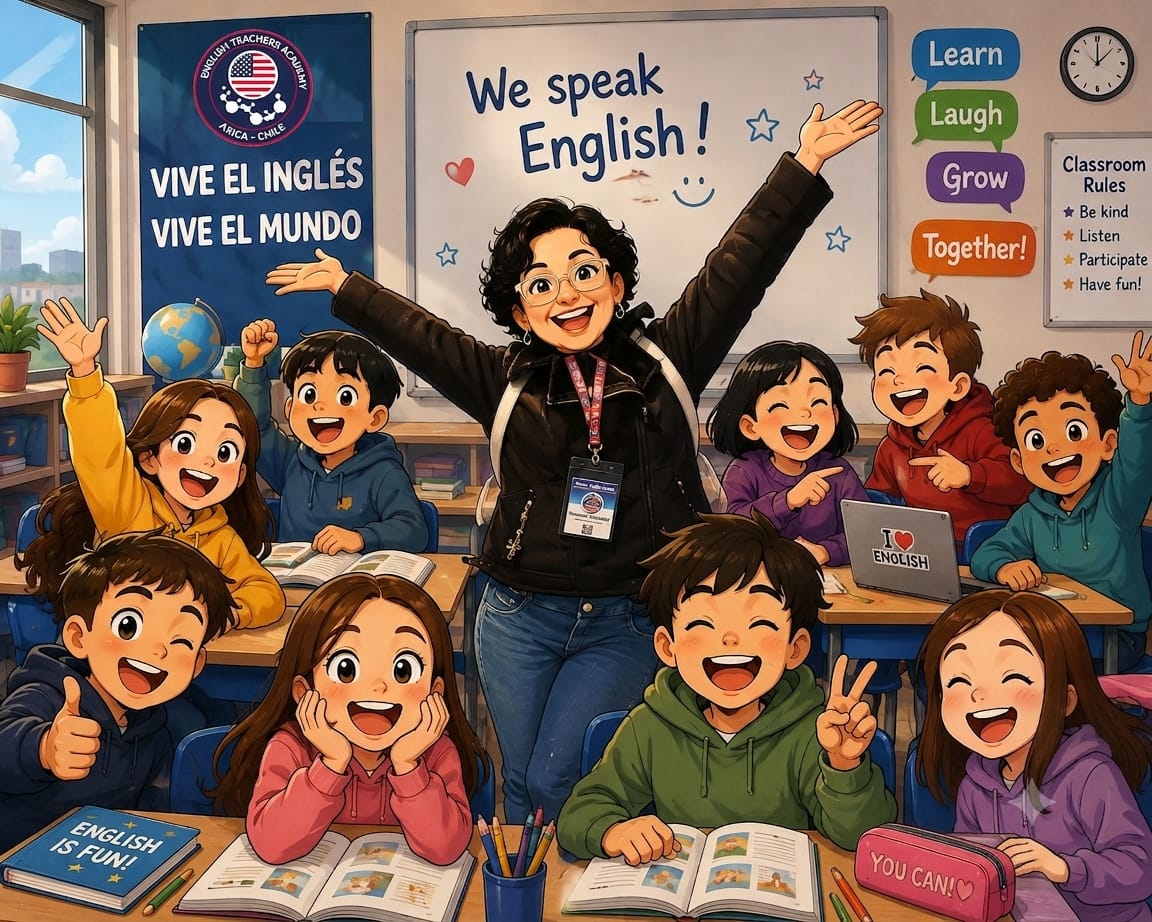
Why Motivation Is the Key to Emotional Intelligence
Year 2 | Issue 8 | August 2026 | Anglo-Saxon®
By Danitza Lazcano Flores – Chile
“Learning a language, participating in a digital environment, resolving conflicts, or preparing for the future require much more than just memorizing content. They require understanding how we feel and knowing what drives us to keep moving forward.”
What Is Emotional Intelligence?
We often hear about Emotional Intelligence (EI), but what does it actually mean in our daily lives? Simply put, it is the ability to recognize what we feel, understand why it happens, express it in a healthy way, and learn to self-regulate (meaning, taking control of our reactions instead of letting our emotions control our actions). Furthermore, it means doing the same for the people around us.
When we develop this skill, we notice immediate changes in our everyday routine:
-
We adapt better: When faced with an unexpected change (like a new classroom dynamic or a complex assignment), we react with flexibility instead of frustration.
-
We communicate better: We learn to say what we think and feel without hurting others or holding back resentment.
-
We make better decisions: We think with a clear head before acting on impulse.
-
We develop empathy: We put ourselves in other people’s shoes, strengthening our friendships and family life.
Motivation: The Fuel of Emotional Intelligence
We can have plenty of emotional tools, but without the drive or a clear purpose, it is hard to put them into practice. This is where intrinsic motivation comes in: that inner drive that isn’t born solely from a prize or a grade, but from the desire to improve, learn, and grow.
Motivation is what turns emotional intelligence into resilience (the ability to get back up when things don’t work out on the first try).
What happens in the learning process?
When learning a second language or any other subject, a student can have incredible talent, but if they lose motivation after the first mistake or don’t know how to manage their nerves, their performance drops. Conversely, a motivated young learner uses their emotional intelligence to say: “My pronunciation or assignment wasn’t great today, but I’m going to practice a bit more and I’ll get it right next time.”
A Comprehensive Impact on Life
Developing motivation alongside emotional intelligence brings major benefits to all areas of human growth:
-
Emotional Well-being: It gives us solid self-esteem, helps us tolerate frustration, and grants us a sense of purpose.
-
Mental Health: It reduces academic stress and anxiety, preventing burnout or mental fatigue.
-
Physical Health: It promotes healthy habits, better sleep, and prevents physical discomfort caused by tension (such as headaches or exhaustion).
-
Social Life: It improves teamwork, creates stronger and healthier bonds, and prevents misunderstandings both in person and in virtual environments.
Practical Examples for School-Age Students and Digital Environments
Let’s look at how this translates into real-world situations our young students experience in class and at home:
-
In Online Classes and Digital Participation
-
The challenge: Overcoming shyness, screen fatigue, or the fear of turning on the camera and microphone to speak English in front of the group.
-
With EI and Motivation: Students acknowledge their nervousness or insecurity (“I’m afraid of making a mistake”), use self-regulation strategies (like taking a deep breath), and focus on their goal to learn. They understand that the virtual classroom is a safe space to practice and that every attempt brings them closer to their goal.
-
-
Facing Language Learning
-
The challenge: Feeling frustrated when a grammar rule or an English text is difficult to understand.
-
With EI and Motivation: Instead of closing the laptop or saying “I’m not good at this,” students manage their frustration, assertively ask their teacher or classmates for help, and persist until they grasp the topic.
-
-
In Social Interactions and Group Work
-
The challenge: A disagreement during a team activity (in person or in digital breakout rooms).
-
With EI and Motivation: Young learners identify their annoyance (recognition), take a moment to cool down (self-regulation), and seek to communicate respectfully to resolve the issue fairly with their peers.
-
-
Navigating Major Changes and Building Autonomy
-
The challenge: Adapting to new schedules, digital platforms, or taking on greater academic responsibilities.
-
With EI and Motivation: Students do not view novelty or technology as a paralyzing obstacle, but as an opportunity to build their independence, manage their time, and discover their own strengths.
-
A Final Message for Our Families. Motivation and emotional intelligence are not fixed traits you are simply born with or without; they are skills that are trained every day, both in the classroom (in-person or online) and at home. When we motivate our young learners to know themselves, value themselves, and persevere, we are not only raising better students, but also happier, more confident individuals who are ready for today’s world.
– English Magazine
¿Por qué la motivación es la clave de la inteligencia emocional?
Aprender un idioma, participar en un entorno digital, resolver conflictos o prepararnos para el futuro requiere mucho más que simplemente memorizar contenidos. Requiere comprender cómo nos sentimos y saber qué nos impulsa a seguir avanzando.”
¿Qué es la Inteligencia Emocional?
A menudo escuchamos hablar de Inteligencia Emocional (IE), pero ¿qué significa realmente en nuestra vida diaria? En pocas palabras, es la capacidad de reconocer lo que sentimos, comprender por qué sucede, expresarlo de manera saludable y aprender a autorregularnos (es decir, tomar el control de nuestras reacciones en lugar de permitir que nuestras emociones controlen nuestras acciones). Además, significa hacer lo mismo con las personas que nos rodean.
Cuando desarrollamos esta habilidad, notamos cambios inmediatos en nuestra rutina diaria:
- Nos adaptamos mejor: Cuando enfrentamos un cambio inesperado (como una nueva dinámica de clases o una tarea compleja), reaccionamos con flexibilidad en lugar de frustración.
- Nos comunicamos mejor: Aprendemos a decir lo que pensamos y sentimos sin herir a los demás ni guardar resentimiento.
- Tomamos mejores decisiones: Pensamos con claridad antes de actuar impulsivamente.
- Desarrollamos empatía: Nos ponemos en el lugar de otras personas, fortaleciendo nuestras amistades y nuestra vida familiar.
Motivación: El combustible de la Inteligencia Emocional
Podemos tener muchas herramientas emocionales, pero sin el impulso o un propósito claro, es difícil ponerlas en práctica. Aquí es donde entra en juego la motivación intrínseca: ese impulso interno que no nace únicamente de un premio o una calificación, sino del deseo de mejorar, aprender y crecer.
La motivación es lo que convierte la inteligencia emocional en resiliencia (la capacidad de levantarnos cuando las cosas no salen bien en el primer intento).
¿Qué ocurre en el proceso de aprendizaje?
Al aprender un segundo idioma o cualquier otra asignatura, un estudiante puede tener un talento increíble, pero si pierde la motivación después del primer error o no sabe cómo manejar sus nervios, su rendimiento disminuye. Por el contrario, un estudiante joven motivado utiliza su inteligencia emocional para decir: “Mi pronunciación o mi tarea no estuvieron muy bien hoy, pero voy a practicar un poco más y lo haré bien la próxima vez”.
Un impacto integral en la vida
Desarrollar la motivación junto con la inteligencia emocional aporta grandes beneficios a todas las áreas del crecimiento humano:
- Bienestar emocional: Nos proporciona una autoestima sólida, nos ayuda a tolerar la frustración y nos brinda un sentido de propósito.
- Salud mental: Reduce el estrés y la ansiedad académica, previniendo el agotamiento o la fatiga mental.
- Salud física: Promueve hábitos saludables, un mejor descanso y previene malestares físicos causados por la tensión (como dolores de cabeza o agotamiento).
- Vida social: Mejora el trabajo en equipo, crea vínculos más fuertes y saludables y previene malentendidos tanto en persona como en entornos virtuales.
Ejemplos prácticos para estudiantes en edad escolar y entornos digitales
Veamos cómo esto se traduce en situaciones reales que nuestros jóvenes estudiantes experimentan en clases y en casa:
- En clases online y participación digital
- El desafío: Superar la timidez, el cansancio frente a la pantalla o el miedo a encender la cámara y el micrófono para hablar inglés frente al grupo.
- Con IE y motivación: Los estudiantes reconocen su nerviosismo o inseguridad (“Tengo miedo de cometer un error”), utilizan estrategias de autorregulación (como respirar profundamente) y se enfocan en su objetivo de aprender. Comprenden que el aula virtual es un espacio seguro para practicar y que cada intento los acerca a su objetivo.
- Enfrentando el aprendizaje de idiomas
- El desafío: Sentirse frustrado cuando una regla gramatical o un texto en inglés es difícil de comprender.
- Con IE y motivación: En lugar de cerrar el computador o decir “No soy bueno para esto”, los estudiantes manejan su frustración, piden ayuda de manera asertiva a su profesor o compañeros y perseveran hasta comprender el tema.
- En las interacciones sociales y el trabajo en equipo
- El desafío: Un desacuerdo durante una actividad grupal (presencialmente o en salas virtuales).
- Con IE y motivación: Los jóvenes estudiantes identifican su molestia (reconocimiento), se toman un momento para calmarse (autorregulación) y buscan comunicarse respetuosamente para resolver el problema de manera justa con sus compañeros.
- Enfrentando grandes cambios y desarrollando autonomía
- El desafío: Adaptarse a nuevos horarios, plataformas digitales o asumir mayores responsabilidades académicas.
- Con IE y motivación: Los estudiantes no ven las novedades o la tecnología como un obstáculo paralizante, sino como una oportunidad para desarrollar su independencia, administrar su tiempo y descubrir sus propias fortalezas.
Un mensaje final para nuestras familias. La motivación y la inteligencia emocional no son características fijas con las que simplemente nacemos o no; son habilidades que se entrenan todos los días, tanto en el aula (presencial u online) como en casa. Cuando motivamos a nuestros jóvenes estudiantes a conocerse, valorarse y perseverar, no solo estamos formando mejores estudiantes, sino también personas más felices, seguras de sí mismas y preparadas para el mundo actual.
– English Magazine
Danitza Lazcano Flores, who also works as a teacher at Colegio Andino Arica, is the CEO of Young Learners English Online Academy by Anglo-Saxon. She holds a degree in English Education and a Bachelor’s in Education from the University of Tarapacá, Chile. Lazcano leads international exam preparation for the Michigan MET Go! and TOEFL Junior, and is certified in adolescent instruction by the University of Dayton, with additional online courses offered by Stanford University and the University of Michigan. She also serves as a Vocational and Educational Counselor and has presented at international conferences on English language teaching.
Website: https://www.englishteachers.cl/
English Teachers Online Academy by Anglo-Saxon | Telephone# (56)(58)2431617 | Whatsapp +56962179467 | www.englishteachers.cl | E-mail: customers.anglosaxon@gmail.com | Arica – Chile.